
In the world of collecting, the adage is sacred: “Buy the seller, not the watch”. But what happens when the seller is anonymous on Chrono24 and the watch costs €150,000? Until today, the only guarantee was the set: original box and paper warranty (“Box & Papers”). This system has three critical failures in 2025:
- Falsifiability: Printing a 2018 Rolex warranty is easier than faking the watch itself. Fake “Full Sets” (real watch + fake box + fake warranty) are a plague inflating the market.
- Deterioration: Paper gets lost, stained, torn. A steel watch lasts 100 years, its paper certificate does not.
- Staticity: A paper warranty only tells you when the watch was born. It says nothing about its life. It doesn’t say if it was dropped, polished, or suffered water damage.
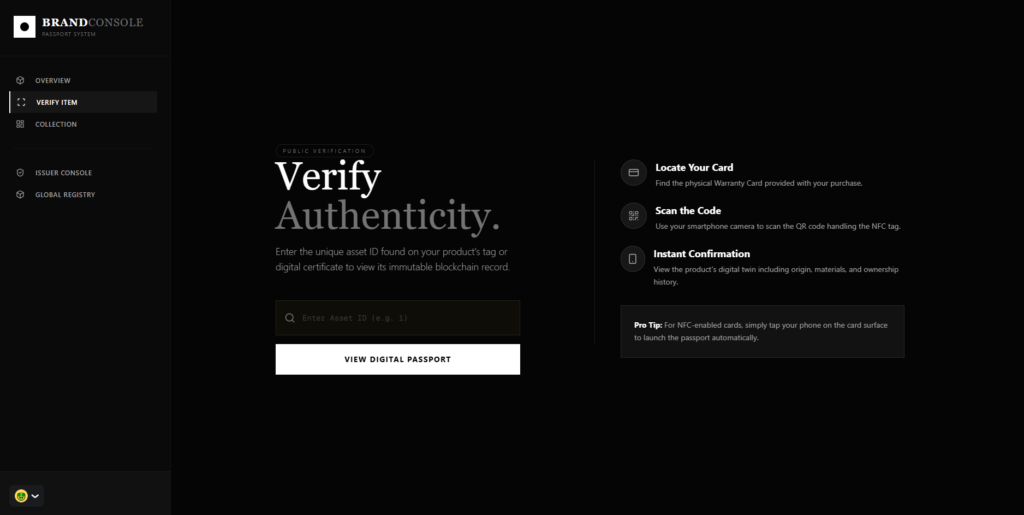
The Digital Product Passport (DPP) eliminates paper. The certificate becomes a Token on the Blockchain, indestructible and unforgeable, linked to the watch by a cryptographic guarantee.
The “Watch” Asset Class
Luxury watches have outperformed the S&P 500 over the last 10 years. They are no longer just accessories; they are portable financial assets. Like any financial asset (stocks, real estate), their value depends on the certainty of information. An apartment with all permits in order is worth more than one with unauthorized construction. A Patek Philippe Nautilus with an immaculate digital history is worth 20-30% more than the same “naked” watch.
Adopting a White Label DPP solution means providing clients with an Investment Protection tool. It’s not marketing; it’s wealth management.
Case Study Analysis 1: The Immutable “Service Log”
(Focus: The importance of certified Service History)
The Scenario: A collector is evaluating the purchase of a 2015 Audemars Piguet Royal Oak. The seller swears the watch was “just serviced by the mother house”. Without a DPP, the buyer has to trust a PDF invoice (easily falsifiable in Photoshop).
The White Label Solution: The Maison implements a DPP system that includes the “Service Log” module.
- Lab Intake: The certified watchmaker receives the physical watch. They scan the digital warranty to verify ownership.
- The Intervention: A full service is performed. The watchmaker replaces the crown and gaskets.
- Event Minting: Upon completion, the watchmaker digitally “signs” an update on the passport.
- Date: 01/01/2025
- Location: AP Service Center, Le Brassus.
- Operations: Full Service + Light Polish.
- Warranty: Extended for 24 months.
Value Impact: When this watch returns to the market, the new buyer will see this event “written in stone” (immutable on the Blockchain). Knowing with mathematical certainty that the watch was cared for by official experts eliminates information asymmetry. The seller can ask for a premium price, and the buyer is happy to pay it for peace of mind. For the Brand, this means incentivizing customers to use only official service centers (the only ones enabled to write to the passport), recovering millions of euros lost to unauthorized independent repairers.
Case Study Analysis 2: The Global “Kill Switch”
(Focus: The fight against theft in European capitals)
The Problem: Wearing an important watch in London or Paris has become risky. Robberies (“Watch Grabbing”) are on the rise. Stolen goods end up on the black or grey market within hours, often crossing national borders where police databases do not communicate.
The DPP Solution: The Digital Passport acts as a financial “Kill Switch”. Imagine Mr. Smith has his watch stolen.
- Immediate Action: As soon as he is safe, he accesses his Digital Vault (Brand’s Web App) from his phone.
- Reporting: He clicks “Report Stolen”. The system asks for confirmation (e.g., police report or 2FA).
- Instant Blacklist: The Smart Contract updates the Token’s metadata status from
ACTIVEtoSTOLEN(code red). - The Domino Effect:
- The thief tries to sell the watch to a fence or a “Cash for Gold” shop.
- The buyer scans the serial or digital warranty.
- ALARM: The system responds with a flashing red screen: “WARNING: THIS WATCH IS REPORTED STOLEN”.
Result: The watch becomes unsellable (“Radioactive”). No sane dealer would touch an asset tracked as stolen on the brand’s official blockchain, because the proof of fencing would be indelible. If thieves know that watches of that Brand have this system, they will stop targeting them. Security becomes an intrinsic value of the brand.
White Label vs. Closed Platforms
Why would a Maison want a White Label system instead of joining existing consortiums? The answer is data. If you use a third-party app for certificates, the customer downloads that app, not yours. When the customer sells the watch, that platform knows, you don’t. With a White Label system:
- Onboarding: The customer enters YOUR ecosystem.
- CRM: You know the current owner, even if they are the tenth in the chain.
- Experience: You can show exclusive content (event invitations, previews) only to those who actually own that watch at that moment. The passport becomes an entry ticket to your Club.
Privacy: The “Zero-Knowledge Proof”
A legitimate concern for collectors is privacy. “I don’t want the world to know I have 10 watches at home.” Modern White Label Blockchain solutions use advanced technologies to protect identity.
- On the public Blockchain, only an alphanumeric address (e.g.,
0x123...) is seen owning a Token. - No one can link
0x123...to the name “John Smith” unless John decides to reveal himself. - The Brand can see the data (if John consents for the warranty), but the public only sees that the watch is “Genuine” and “Not Stolen”, without knowing who it belongs to.
Conclusion: The Digital Concierge
The future of luxury is not selling objects, it is selling belonging. A White Label Digital Product Passport transforms an inert object of metal and sapphire into a living service.
- It reminds you when to do maintenance.
- It protects your value over time.
- It helps you recover it if you lose it.
- It recognizes you as a VIP client in any boutique in the world, simply by showing your digital wallet.
For a Watch Maison, not implementing this technology today means leaving its historical heritage (and its customers) at the mercy of the chaos of the grey market. Implementing it means taking back control.
